Warehouses and small businesses often default to buying a forklift when a pallet jack or stacker would actually serve the job better — and at a fraction of the cost. Each piece of equipment is built for a different combination of load weight, lift height, and space constraints. Understanding the differences helps avoid overspending on equipment you don’t need, or underequipping for work you do.
What a Pallet Jack Does
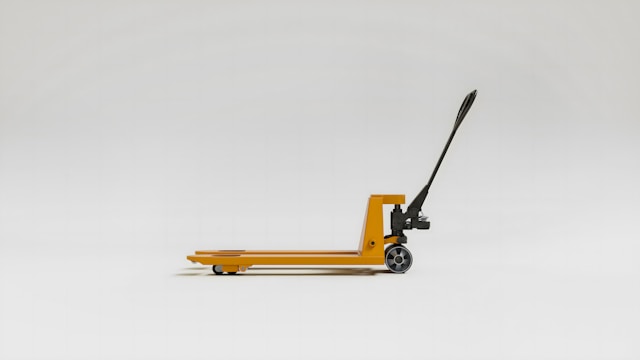
A pallet jack (also called a pump truck) is designed to lift a pallet just high enough off the ground to move it horizontally — typically only a few inches. It has no significant vertical lifting capability, making it ideal for moving pallets across a floor, loading and unloading trucks, or repositioning inventory within a single level. Pallet jacks are manual or electric, low-cost, and require minimal training to operate safely.
What a Stacker Does
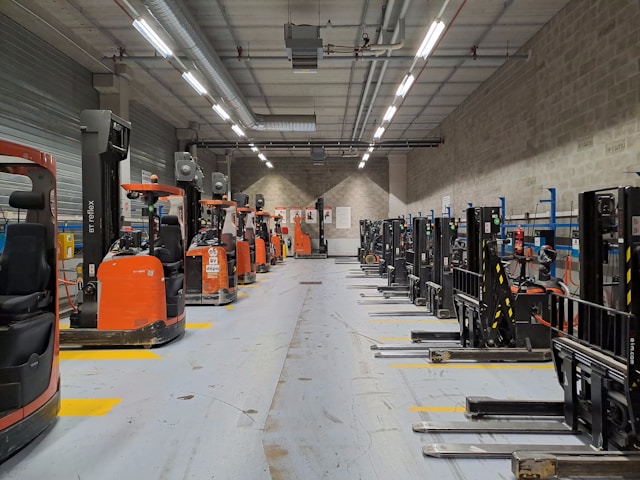
A stacker adds real vertical lift to the pallet jack’s horizontal movement capability, allowing pallets to be raised and placed onto low to mid-level racking. Stackers are a middle-ground option: more capable than a pallet jack, but simpler, smaller, and less expensive than a full forklift. They’re well suited to smaller warehouses or businesses with light-to-moderate racking that doesn’t require the reach or capacity of a forklift.
What a Forklift Does
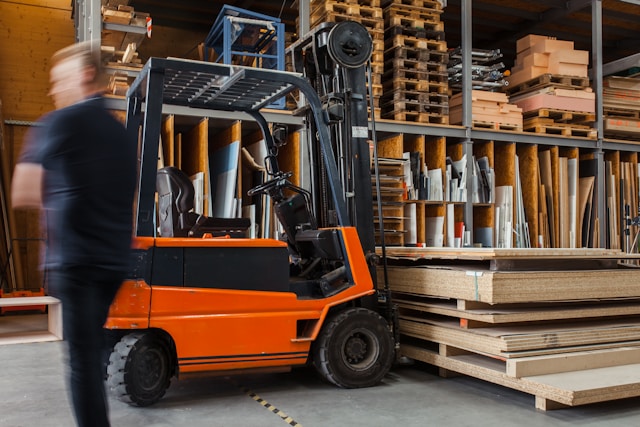
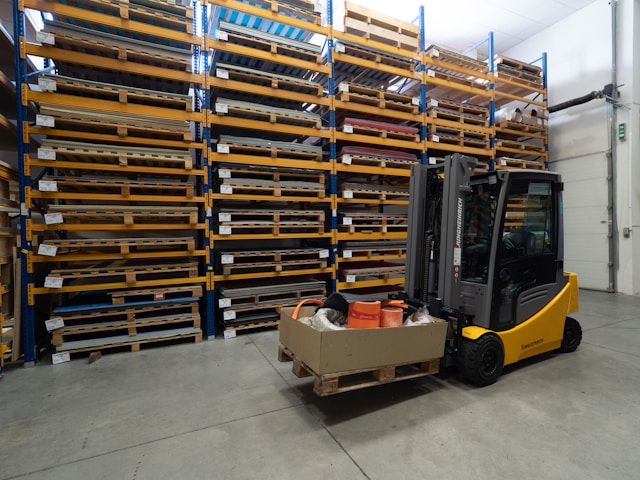
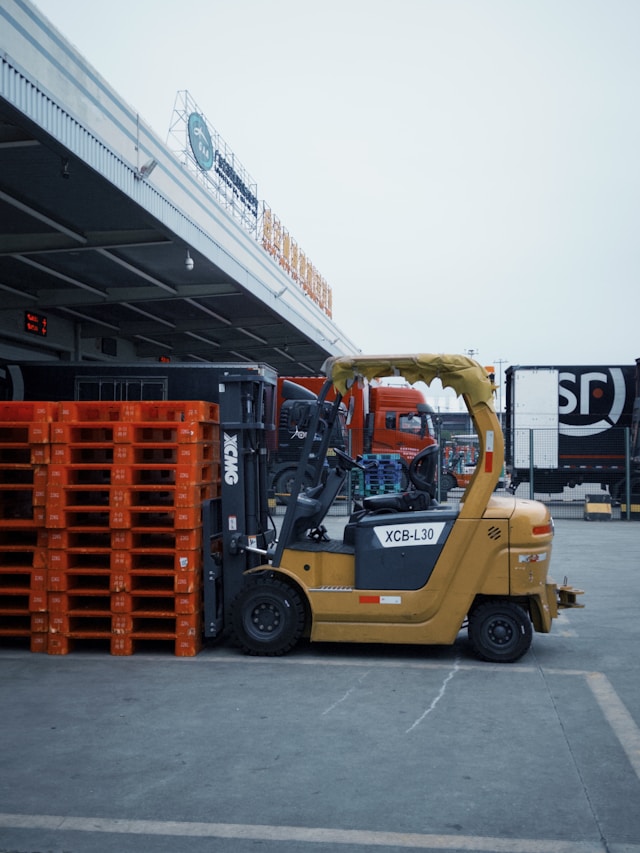
A forklift is the most capable and versatile of the three, able to lift significantly heavier loads to much greater heights, maneuver outdoors, and handle continuous, high-intensity use across multiple shifts. Forklifts come in many types — counterbalance, reach trucks, rough-terrain models — each suited to different environments and load requirements, but all offering substantially more capability (and cost) than a pallet jack or stacker.
Comparing Load Capacity
Pallet jacks typically handle moderate loads suited to standard pallet weights but aren’t designed for continuous heavy use. Stackers offer a step up in both capacity and lift height, suited to warehouses with light-duty racking. Forklifts offer the highest load capacities by a wide margin, making them the right choice for heavy, continuous, or high-volume operations.
Comparing Cost
Pallet jacks are the least expensive option by a significant margin, making them accessible even for very small operations. Stackers cost more than pallet jacks but considerably less than forklifts, offering a reasonable middle ground for businesses that need vertical lift but not forklift-level capacity. Forklifts represent the largest investment of the three, reflecting their substantially greater capability.
Which One Does Your Operation Actually Need?
If your work is primarily moving pallets horizontally across a single level — loading trucks, repositioning stock — a pallet jack is likely sufficient and avoids unnecessary cost. If you need to place pallets onto low or mid-level racking in a smaller space, a stacker often fits the job without the expense or footprint of a forklift. If your operation involves higher racking, heavier loads, outdoor use, or continuous multi-shift work, a forklift is generally the appropriate choice despite the higher investment.
Avoiding the Most Common Mistake
The most common mistake businesses make is buying more capability than they need — purchasing a forklift when a stacker would do the job, or a stacker when a pallet jack would suffice. This isn’t just a cost issue; oversized equipment can also be harder to maneuver in tight spaces than the right-sized alternative. Matching equipment to actual daily tasks, rather than defaulting to the most powerful option, typically produces both lower costs and better day-to-day efficiency.
Frequently Asked Questions
Can a stacker replace a forklift entirely? Only for lighter-duty operations with lower racking and moderate load weights. Stackers aren’t designed to match a forklift’s capacity, lift height, or ability to operate outdoors or under continuous heavy use.
Is an electric pallet jack worth the extra cost over a manual one? For frequent, repetitive use or heavier loads, an electric pallet jack reduces operator fatigue and speeds up operations, often justifying the added cost for busier warehouses.
Do stackers require special operator training? Requirements vary by region and equipment type, but because stackers involve vertical lifting, proper operator training is generally recommended even though they’re simpler to operate than a full forklift.