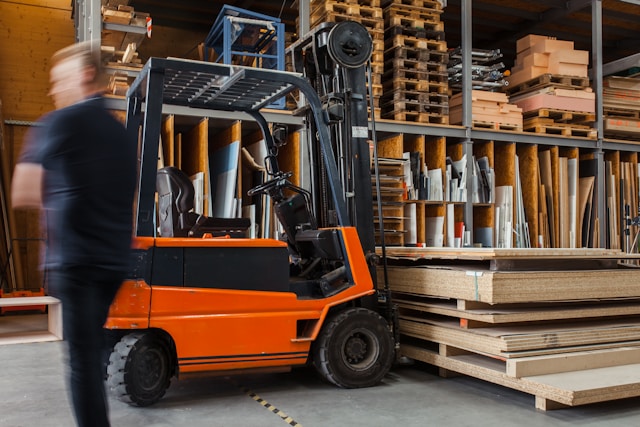
With multiple forklift types, capacities, and fuel options available, choosing the wrong one can lead to slower operations, higher running costs, or equipment that simply can’t handle the job. The right forklift depends on a handful of specific factors about your warehouse and workload — not just the biggest or most popular model on the market. Here’s how to narrow down the right choice.
Step 1: Identify Your Load Capacity Needs
Every forklift is rated for a maximum load capacity, and choosing a model that’s underpowered for your heaviest regular loads creates both safety risks and reduced efficiency. It’s worth calculating your typical maximum load weight — including pallet and packaging weight, not just product weight — and choosing a forklift rated comfortably above that figure, rather than exactly at it.
Step 2: Consider Your Aisle Width and Warehouse Layout
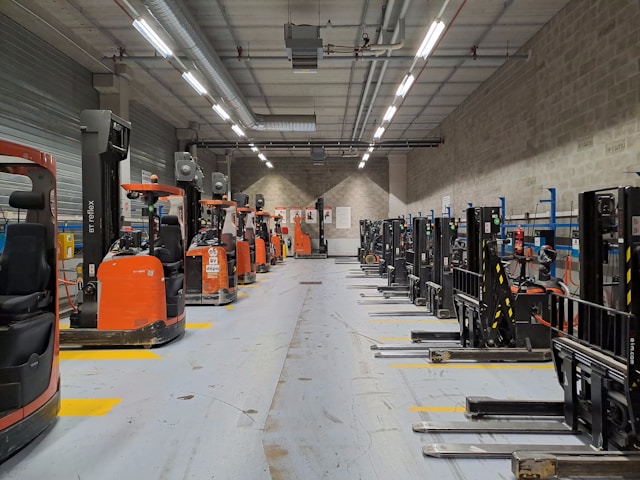
Narrow-aisle warehouses require different forklift types than wide-open facilities. Standard counterbalance forklifts need wider turning space, while reach trucks and narrow-aisle forklifts are designed specifically for tighter layouts. Measuring your actual aisle widths before choosing a model prevents the common mistake of buying a forklift that can’t maneuver efficiently in your existing space.
Step 3: Decide Between Indoor and Outdoor Use
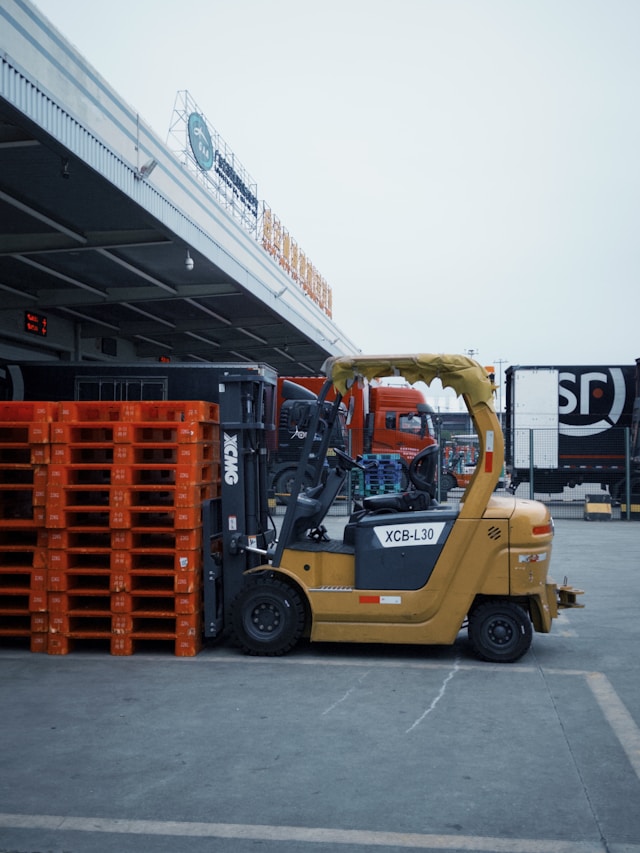
Forklifts used primarily indoors, on smooth warehouse floors, typically run on electric power, which produces no emissions and operates more quietly. Forklifts used outdoors, on uneven or rough terrain, generally need internal combustion engines (diesel or LPG) for the power and durability required. Choosing based on your primary environment prevents performance issues down the line.
Step 4: Match Lift Height to Your Racking System
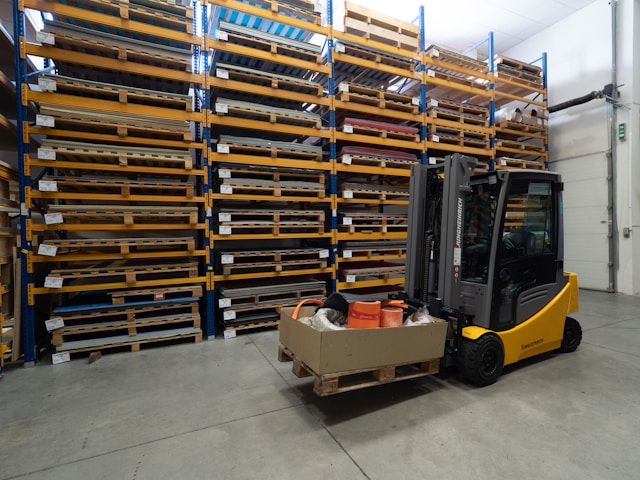
If your warehouse uses high racking, the forklift’s maximum lift height needs to comfortably reach your top shelves, with some margin for uneven pallets or racking shifts over time. Underestimating required lift height is a common and costly mistake, since it directly limits how much of your vertical storage space is actually usable.
Step 5: Factor In Frequency and Intensity of Use
A forklift used for a few hours a day in light-duty work has very different requirements than one running multiple shifts in continuous heavy use. High-intensity operations benefit from more robust, higher-capacity equipment designed for sustained use, while lighter operations can often use smaller, more cost-effective models without sacrificing performance.
Step 6: Consider Total Cost, Not Just Purchase Price
Fuel or electricity costs, maintenance requirements, and expected lifespan all factor into the real cost of operating a forklift over time. An electric forklift may cost more upfront but less to run daily, while a diesel model may have a lower purchase price but higher fuel and maintenance costs depending on usage intensity. Calculating cost per operating hour, rather than just the purchase price, gives a clearer comparison between options.
Step 7: Get Expert Input Before Finalizing
Because forklift selection depends on several interacting factors — capacity, layout, environment, and usage pattern — it’s often worth consulting directly with a supplier who can walk through your specific warehouse conditions rather than relying on general specifications alone. A quick site assessment can catch issues that aren’t obvious from measurements alone.
Frequently Asked Questions
What’s the difference between a counterbalance forklift and a reach truck? Counterbalance forklifts are more versatile and suited to wider aisles and mixed indoor/outdoor use, while reach trucks are designed specifically for narrow-aisle warehouses and higher racking, offering better maneuverability in tight spaces.
Should I choose an electric or diesel forklift? Electric forklifts are generally better suited for indoor use due to zero emissions and quieter operation, while diesel forklifts are typically better for outdoor or heavy-duty applications requiring more power and durability.
How do I know what lift height I need? Measure the height of your tallest racking level and choose a forklift with a maximum lift height that comfortably exceeds that measurement, accounting for uneven pallets or future storage expansion.